The coast is one of the world's great musical crossroads.
For over a thousand years, trade winds carried Arab merchants, Indian traders and Persian poets to the same shoreline - and each left something behind in the music.
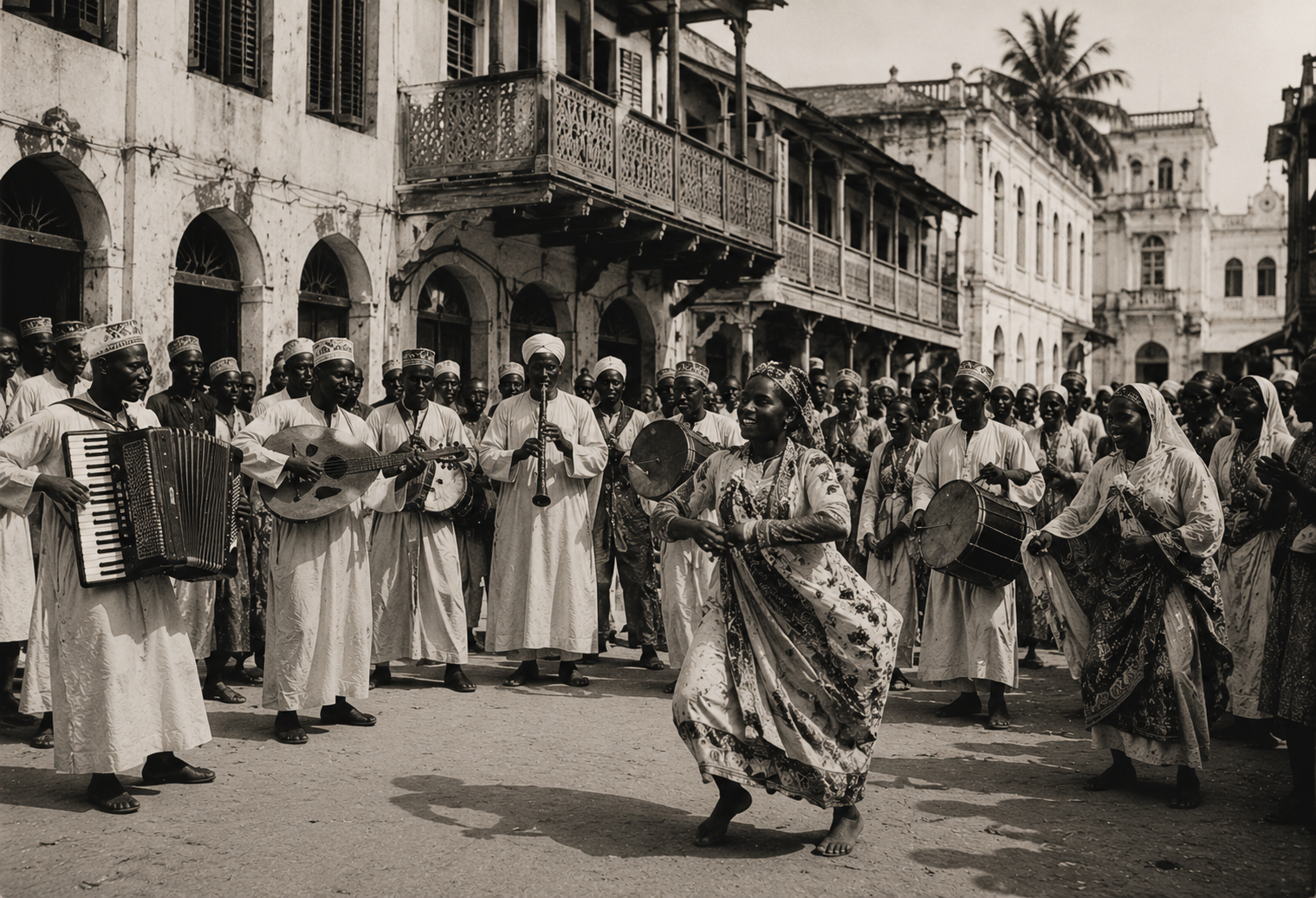
Swahili poetry in ensemble form
Taarab (a form of sung Swahili poetry) is a century-old Swahili coast ensemble style with ouds, qanun, violins, accordions and percussion. Sultan Seyyid Barghash bin Said of Zanzibar popularised it from 1870 to 1888 by importing an Egyptian ensemble and sending musicians to Cairo to study.
Siti binti Saad became an early star through 1928 HMV recordings in Bombay. Swahili Jazz translates the taarab spirit through jazz horns and keyboards.
Celebration, wit and rhythmic exchange
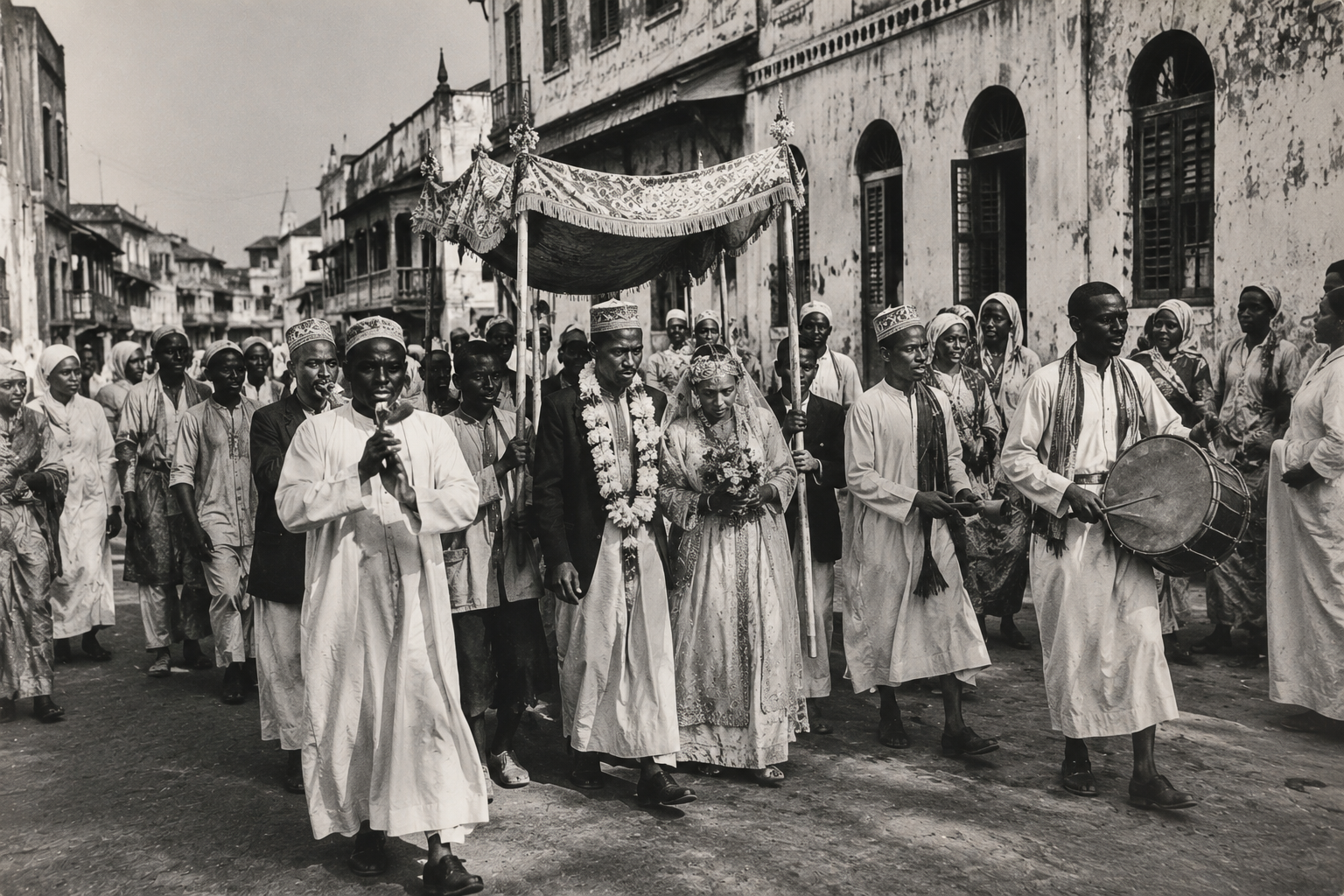
Chakacha (a lively coastal dance) is performed at weddings and festive events, using insistent drum patterns and syncopated beats.
Kidumbak (a small-group Zanzibari genre) uses two hand drums, tea-chest bass, rattles, clapping and rapid Swahili vocal exchanges.
Mombasa's wedding sound
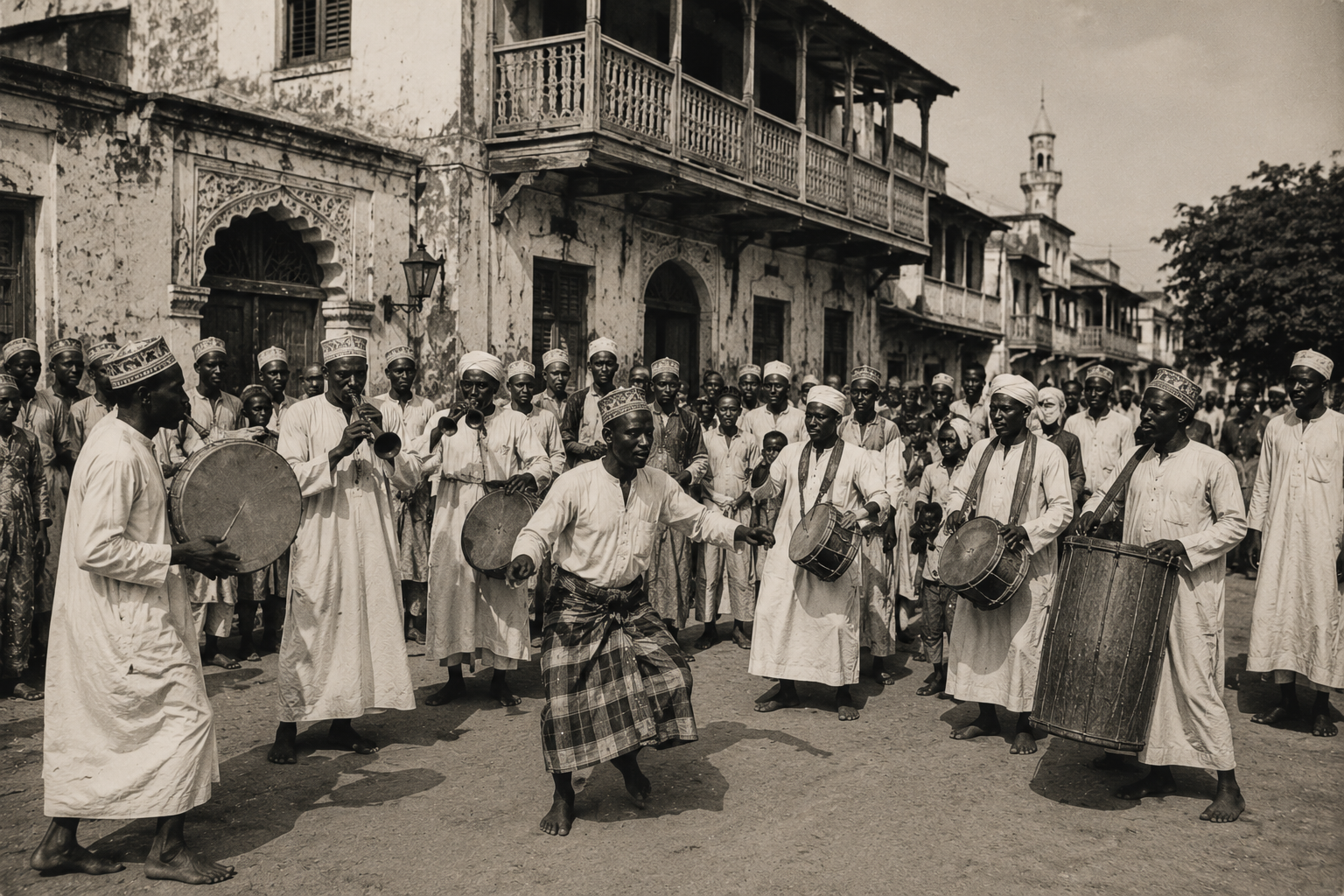
Bango fuses jazz, rhumba and Mijikenda traditional music, including mwanzele (funeral music) and chakacha.
"Harusi bila Bango si harusi" - a wedding without Bango is not a wedding. Juma's mentor Mzee Ngala is its living master, and the Swahili Jazz Band traces a direct line to Bango Sounds.
Mijikenda rhythm and Islamic song
Ngoma (drumming and dance) among the nine Mijikenda tribes uses drums, marimba-like xylophones and communal singing.
Sufi qasida (devotional praise song) and Swahili songs for Mawlid lend modal scales and lyrical reverence to the compositions.